

Full Tort vs. Limited Tort Auto Insurance in 2026 (Differences Explained)
Full tort vs. limited tort auto insurance affects your right to sue. Full tort costs $170/mo and allows claims for pain and suffering, while limited tort costs $110/mo but limits lawsuits. Knowing the difference between full and limited tort helps you choose the most important tort insurance for your needs.
Read more





Table of Contents
Table of Contents

Insurance Content Team Lead
Tonya Sisler has been a technical insurance writer for over five years. She uses her extensive insurance and finance knowledge to write informative articles that answer readers' top questions. Her mission is to provide readers with timely, accurate information that allows them to determine their insurance needs and choose the best coverage. Tonya currently leads a team of 10 insurance copywri...
Tonya Sisler

Commercial Lines Coverage Specialist
Michael Vereecke is the president of Customers First Insurance Group. He has been a licensed insurance agent for over 13 years. He also carries a Commercial Lines Coverage Specialist (CLCS) Designation, providing him the expertise to spot holes in businesses’ coverage. Since 2009, he has worked with many insurance providers, giving him unique insight into the insurance market, differences in ...
Michael Vereecke
Updated February 2025
Full tort vs. limited tort auto insurance can make a big difference in the coverage you get after an accident. Full tort auto insurance allows you to sue for pain and suffering, giving you more coverage, especially for serious injuries.
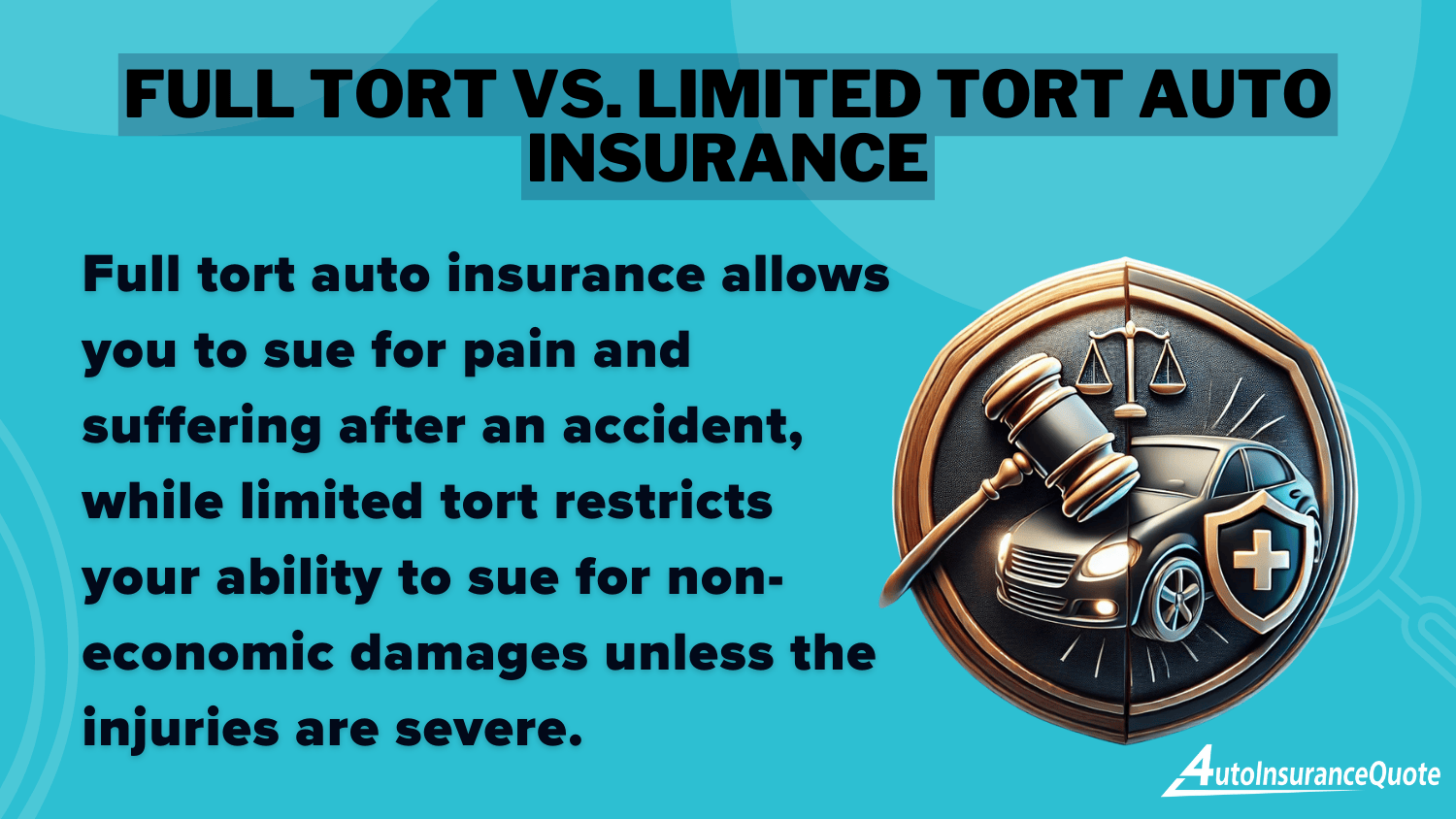
On the other hand, limited tort auto insurance offers lower premiums but limits your ability to sue unless you have severe injuries. Understanding these options helps you choose the right tort auto insurance for your needs.
If you’re looking for the best auto insurance quotes by state, consider comparing quotes from different companies to find the best deal.
To find out if you can get cheaper auto insurance rates, enter your ZIP code into our free quote tool to instantly compare rates from various companies near you.
- Full tort lets you sue for pain and suffering with more coverage
- Limited tort offers lower premiums but limits lawsuits to severe injuries
- Choosing between full tort and limited tort depends on your coverage needs
Understanding Tort Systems in Auto Insurance
First – what is the ‘tort’ system? In short, if your state uses the ‘tort’ system when an automobile accident occurs, one of the parties involved will be determined to be the party that caused the accident, and this person is labeled the ‘at fault’ party.
Full tort provides broader legal protection, allowing compensation for pain and suffering, while limited tort offers lower premiums but restricts your ability to sue for minor injuries
Karen Condor Insurance and Finance Writer
It is this party and their auto insurance that will be subject to paying the victims’ accident-related medical treatment and property damage costs, and in many states, this party will be open to lawsuits for damages as well; this is why it’s referred to as the ‘tort’ system.
Let’s see how other places define the “tort” system in regard to auto insurance.
Tort System in Rocky Mountain Insurance Information Association
This is a system where the driver who is at fault for causing a traffic crash is responsible for paying the victim’s medical expenses and compensating for additional damages, such as loss of wages and “pain and suffering.”
Read more: Affordable Full Coverage Auto Insurance
Tort System in Automobile.com
The traditional tort is designed to pay for the medical expenses of another party in the event of an accident caused by the policyholder. The insurance does not pay the policyholder’s medical expenses.
Full Tort vs. Limited Tort Auto Insurance Monthly Rates by Provider| Insurance Company | Limited Tort Coverage | Full Tort Coverage |
|---|---|---|
 | $160 | $210 |
 | $165 | $215 |
 | $140 | $200 |
 | $130 | $190 |
 | $180 | $220 |
 | $150 | $205 |
 | $120 | $180 |
 | $135 | $195 |
 | $168 | $218 |
 | $110 | $170 |
The process of proving that an accident occurred, the policyholder was at fault, and the medical expenses that came from the accident are the responsibility of the party making a claim.
In states that follow tort insurance, the driver who caused the accident pays for the other person’s damages. The most common tort auto insurance claim usually involves injuries from car accidents, where the victim can ask for money to cover medical bills, lost wages, and pain and suffering. Knowing how this works helps drivers understand their rights and what their insurance covers.
Explore the different types of auto insurance coverage to understand how tort insurance works and what it covers.
Free Insurance Comparison
Compare Quotes From Top Companies and Save
Full Tort Auto Insurance: Explained
Full tort auto insurance gives you the most coverage if you’re hurt in an accident. The main purpose of tort auto insurance is to let you sue the person who caused the accident for both financial and emotional damages, like medical bills and pain and suffering.
With full tort, you can also seek compensation for things like emotional distress or loss of quality of life, which you might not be able to with other types of insurance.
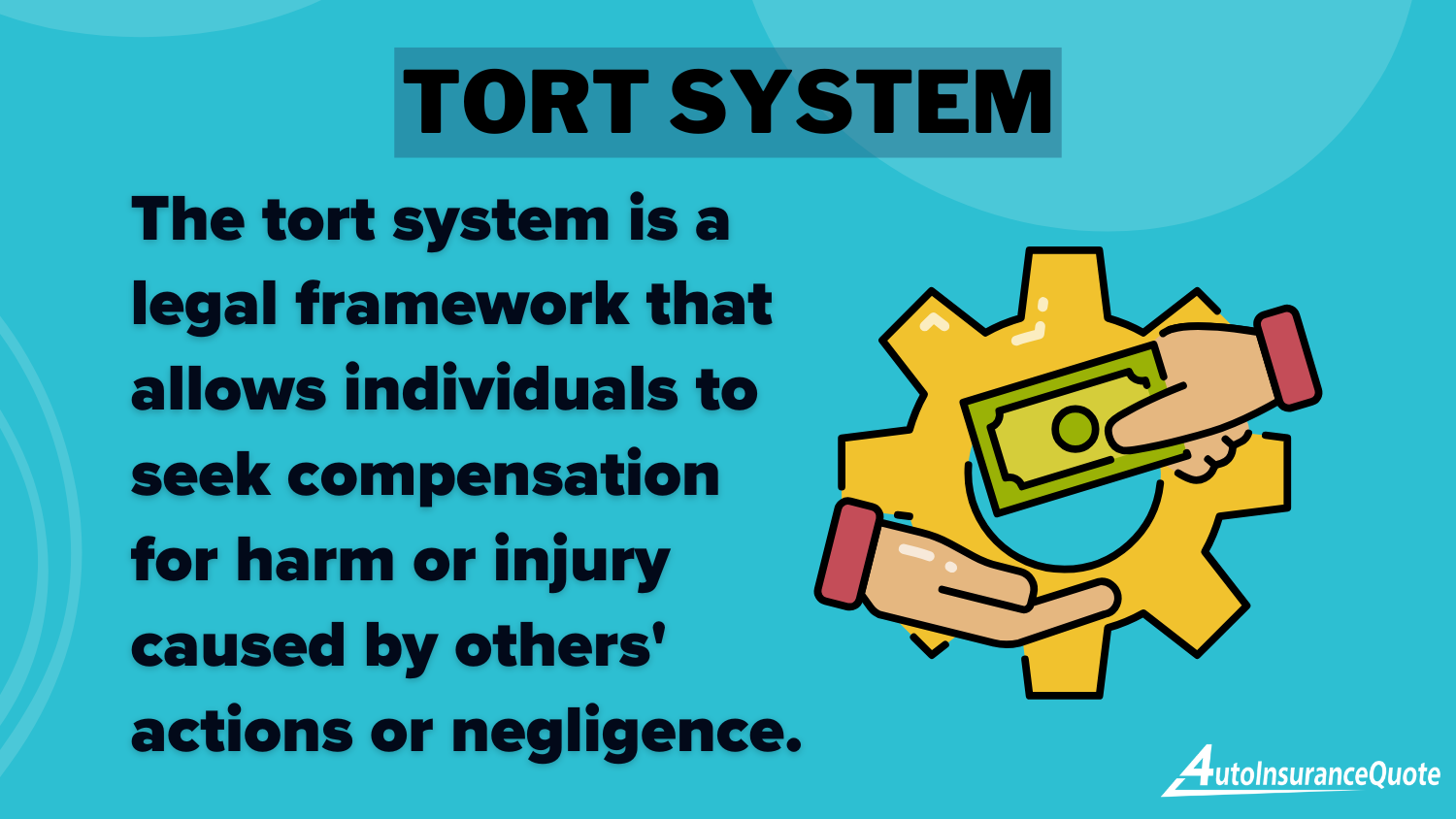
That’s why full tort is considered one of the most important tort insurance options. It’s a good choice if you want to make sure you get full compensation, especially if you’re seriously injured.
In states like Pennsylvania, where you have to choose between full tort and limited tort, it’s important to understand the differences so you can pick the best insurance for your needs.
Read more: 10 Best Auto Insurance Companies
Limited Tort Auto Insurance: Explained
Understanding what limited tort is can help you make the right choice when selecting car insurance. With limited tort auto insurance, you agree to lower premiums, but your ability to sue for pain and suffering is restricted unless your injuries are considered severe.
Today is #InsuranceAwarenessDay! Do you know what type of auto insurance policy you have? We always encourage drivers to maintain a full tort policy. Watch to learn why! #CarInsuranceTips pic.twitter.com/IeTRmshGn4
— Freeburn Law (@PAInjurylaw) June 28, 2021
This means that if you’re in an accident and suffer minor injuries, like whiplash or bruises, you may not be able to recover extra compensation beyond medical expenses and lost wages. Choosing limited tort auto insurance can save you money upfront, but it comes with limitations if you ever need to file a claim.
Some states, like Pennsylvania, allow drivers to choose between full and limited tort, so it’s important to weigh the pros and cons before deciding. If you’re unsure what limited tort is and how it impacts your rights, reviewing your policy and consulting with an insurance expert can help you make an informed decision.
Read more: Affordable Personal Injury Protection (PIP) Auto Insurance Coverage
Full Tort vs. Limited Tort Auto Insurance: Laws and Regulations in Your State
In the U.S., 38 states operate under the ‘tort’ system for auto insurance, while 12 states follow a ‘no-fault’ insurance system. The primary difference between the two is that in ‘no-fault’ states, drivers buy Personal Injury Protection (PIP) coverage, which pays for their medical expenses, lost wages, and other costs, regardless of who caused the accident.
On the other hand, the ‘tort’ system allows the at-fault party’s insurance to cover injury claims, but it can get more complicated with two options: Full Tort and Limited Tort.
Full Tort vs. Limited Tort Auto Insurance: Cost Differences, Coverage Limits, and Legal Implications| Aspect | Full Tort Coverage | Limited Tort Coverage |
|---|---|---|
| Right to Sue | Unlimited right to sue | Limited right to sue. |
| Premium Cost | Higher premiums; $200/month | Lower premiums; $150/month |
| Coverage Limits | Includes pain and suffering claims | Excludes pain and suffering claims |
| Legal Implications | Full legal recourse for damages | Limited legal recourse for damages |
With full tort coverage, if you’re injured in an accident that wasn’t your fault, you can sue the responsible party for pain and suffering, giving you more flexibility. In limited tort states, however, the ability to sue for additional damages is restricted, typically only allowing lawsuits for serious injuries, which can be hard to prove.
Understanding whether your state operates under full tort or limited tort laws is essential, so it’s best to check with your insurer or your state’s insurance office to be sure.
Read more: Does auto insurance cover whiplash symptoms?
Free Insurance Comparison
Compare Quotes From Top Companies and Save
Full Tort vs. Limited Tort Auto Insurance: Key Differences
When you’re buying auto insurance, it’s in your best interest to know about the difference between full and limited tort because it impacts how much protection you will have if you’re injured in an accident.
- Full Tort: With full tort, you can sue for both financial damages (like medical bills or lost wages) and non-financial damages (such as pain and suffering). It gives you more freedom to claim if you’re seriously injured in an accident.
- Limited Tort: Limited tort is cheaper but limits your ability to sue for pain and suffering unless your injuries are very serious. It helps save money on your premiums but gives you less compensation if you’re injured.
- Full Tort vs. Limited Tort in Pennsylvania: In Pennsylvania, drivers must choose between full tort and limited tort coverage. Full tort gives you more options if you need to sue, while limited tort is more affordable but has restrictions on what you can claim.
When deciding between full tort vs. limited tort insurance, think about whether you want extra protection or lower insurance costs.
Read more: Understanding How Auto Insurance Works
Full Tort vs. Limited Auto Insurance: What They Mean for You
The debate over what tort insurance is and what limited tort means has been going on for years in many state legislatures, with most states sticking to the same system or switching to the other.
While more states use the tort auto insurance coverage system, which lets drivers sue for pain and suffering, supporters of limited tort say their insurance costs are lower. They don’t have to worry if the other driver has enough coverage.

In full tort states, drivers can get extra protection with policies like Personal Injury Protection (PIP) and Uninsured Motorist Protection, so the need for what limited tort means isn’t as big of a concern.
If you live in a full tort state, it’s important to understand your options and get the coverage you need. Instead of just going with the state’s minimum insurance, it’s a good idea to get more coverage, like tort auto insurance coverage, to protect yourself if something serious happens. This way, you’ll be better covered no matter which system your state uses.
Enter your ZIP code into our free quote tool to find the best auto insurance providers for your needs and budget.
Frequently Asked Questions
What is the difference between full tort and limited tort auto insurance?
The difference between full tort and limited tort auto insurance is that full tort allows you to sue for a broader range of damages, including pain and suffering, while limited tort restricts this, only covering medical expenses and out-of-pocket costs unless the injury is severe.
Is limited tort auto insurance considered full coverage?
No, limited tort auto insurance is not considered full coverage. It limits your ability to claim compensation for pain and suffering, unlike full tort, which provides broader coverage. Find your cheapest auto insurance quotes by entering your ZIP code into our free comparison tool.
Is it worth getting full tort auto insurance?
Yes, full tort auto insurance is worth it if you want more protection and the ability to claim compensation for pain, suffering, and emotional distress, especially for serious injuries. Explore how to file an auto insurance claim and secure compensation for damages, medical bills, and pain and suffering after an accident.
What is the most serious tort insurance?
The most serious tort insurance is full tort auto insurance because it allows you to seek compensation for both economic and non-economic damages, offering the most comprehensive protection.
What is the difference between strict and absolute liability in tort insurance?
Strict liability holds someone responsible for damages, regardless of fault, while absolute liability holds a party fully accountable for damages, often in cases of inherently dangerous activities.
What is the difference between tort and no-fault insurance?
Under the tort system, the at-fault party is responsible for paying the victims’ expenses. In the no-fault system, each driver’s insurance covers their own medical expenses regardless of who caused the accident.
Read more: Auto Insurance Claims
What is the tort system in auto insurance?
The tort system is a legal framework used in automobile accidents where one party is determined to be at fault. The at-fault party and their insurance are responsible for covering the victims’ medical expenses and property damage costs.
How many states operate under the tort system?
There are 38 states that operate under the tort system, while the other 12 states have a “no-fault” insurance system.
What are “full tort” and “limited tort” options?
In tort states, there are often two options: full tort and limited tort. Full tort allows injured parties to sue the at-fault driver for additional damages, while limited tort restricts the ability to sue unless the injuries are severe.
Read more: How To Check the Status of an Auto Insurance Claim
Is the tort system better than the no-fault system?
The superiority of one system over the other is a matter of debate. While tort states outnumber no-fault states, proponents of no-fault argue that it reduces overall insurance costs and eliminates the need to worry about the other party’s coverage. However, insurance companies in tort states offer additional coverage options to address these concerns.
Related Articles
-
Mar 2025

How does the auto insurance claims process differ for uninsured/underinsured motorist coverage with Geico?
-
Mar 2025
How does the auto insurance claims process differ for uninsured/underinsured motorist coverage with State Farm?
-
Nov 2024

How to File an Auto Insurance Claim (2026)
-
Nov 2024

What happens if stolen car is recovered after insurance company pays claim
-
Feb 2025
80/20 Auto Insurance Settlements in 2026 (Complete Guide)
-
Dec 2023

Automatic Payments Auto Insurance Discount: Save on Auto Insurance (2026)



Get a FREE Quote in Minutes
Insurance rates change constantly — we help you stay ahead by making it easy to compare top options and save.