

Car Title vs. Registration in 2026 (Differences Explained)
Car title vs. registration refers to the difference between ownership and legal road use. Vehicle registration means your car is recorded with the state, while the car title proves ownership. Both are essential since over 90% of states require updated registration and titles for legal vehicle operations.
Read more





Table of Contents
Table of Contents

Insurance Claims Support & Sr. Adjuster
Kalyn grew up in an insurance family with a grandfather, aunt, and uncle leading successful careers as insurance agents. She soon found she has similar interests and followed in their footsteps. After spending about ten years working in the insurance industry as both an appraiser dispatcher and a senior property claims adjuster, she decided to combine her years of insurance experience with another...
Kalyn Johnson

Licensed Insurance Agent
Tim Bain is a licensed insurance agent with 23 years of experience helping people protect their families and businesses with the best insurance coverage to meet their needs. His insurance expertise has been featured in several publications, including Investopedia and eFinancial. He also does digital marking and analysis for KPS/3, a communications and marking firm located in Nevada.
Tim Bain
Updated December 2024
Car title vs. registration explains the key difference between the two essential vehicle documents. A car title proves ownership, listing the legal owner and any liens, while vehicle registration ensures compliance with state laws, allowing your car to be legally driven.
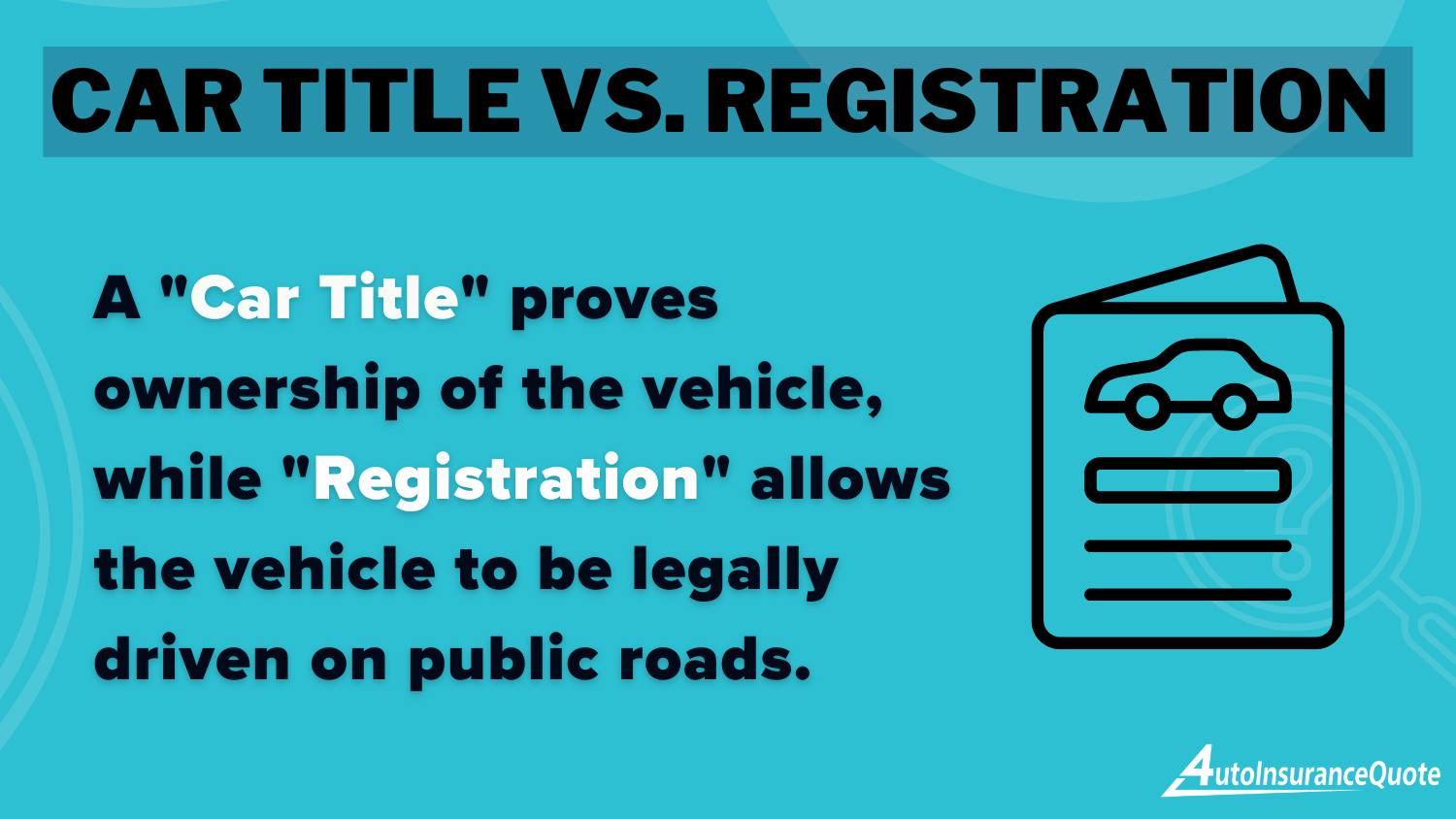
Many people ask if a car title and registration are the same thing. The answer is no. The title establishes ownership, while registration verifies that your vehicle has been properly recorded with the state and meets legal requirements for road use.
While both documents are necessary, they serve distinct purposes: the title provides proof of ownership, while registration ensures your vehicle is legally allowed on public roads.
Understanding these auto insurance differences is crucial for vehicle owners. Enter your ZIP code above to learn how car title and registration affect car insurance and registration requirements specific to your state.
- Car title proves ownership, while registration ensures legal road use
- Registration verifies state compliance; title lists legal owners or liens
- Both title and registration are essential for proper vehicle documentation
Understanding the Difference Between Car Title and Registration
Car registration and car title are distinct documents. A car title serves as proof of ownership, listing the vehicle’s legal owner(s). If there’s a loan, the lender keeps the title until it is paid off. Many ask if title and registration are the same thing. The answer is no. Car registration proves your vehicle has been registered with state authorities, providing a license plate and sticker. It’s not proof of ownership.
In addition to title and registration, it’s vital to consider auto insurance requirements in your state. Each state has specific laws regarding minimum auto insurance coverage. Understanding these requirements is crucial to ensure your vehicle is adequately insured and compliant with state laws, avoiding penalties and potential legal consequences.
Differences Between Car Title and Registration| Category | Car Title | Registration |
|---|---|---|
| Definition | Legal document proving vehicle ownership. | Process of registering the vehicle with the state to allow it to be legally driven on public roads. |
| Issued By | Department of Motor Vehicles (DMV) or equivalent. | DMV or equivalent. |
| Purpose | Establishes ownership rights. | Ensures the vehicle meets state requirements for operation. |
| Key Information | Vehicle owner, Vehicle Identification Number (VIN), lienholder (if applicable). | Vehicle owner, VIN, license plate number, proof of emissions (in some states). |
| Cost | One-time fee when purchasing or transferring ownership. | Annual or biannual registration fees. |
| Renewal Requirements | Not applicable unless ownership changes. | Required periodically (e.g., yearly or every two years). |
| Penalties for Non-Compliance | Cannot legally sell or transfer ownership of the vehicle. | Fines, suspension of driving privileges, or impoundment of the vehicle. |
| Documentation Needed for Compliance | Proof of purchase, lien release (if financed), identification. | Proof of insurance, title, identification, emissions certificate (if required). |
While both are essential, car registration is for legal compliance, ensuring the vehicle can be legally driven. A title, on the other hand, proves ownership. The difference between car title and registration is clear: title confirms ownership, and registration ensures the vehicle is legally registered.
To clarify, the certificate of title vs. registration serves different purposes, with the title listing the owner and the registration confirming state compliance. Understanding the difference between registration and title is key for any car owner.
Read More: What is the minimum auto insurance coverage that I have to sign up for?
Free Insurance Comparison
Compare Quotes From Top Companies and Save
The Importance of a Vehicle’s Title: Car Title Explained
A motor vehicle title is a legally binding document identifying a vehicle’s rightful owner(s), whether an individual or a business. Many people ask, “Is a title the same as registration?” The answer is no—they serve different purposes. A vehicle title establishes ownership, while registration confirms compliance with state laws necessary for lawful operation on public roads.
Are the pink slip and title the same thing? The difference between a title and a pink slip is that in some states, a vehicle title is referred to as a “pink slip” because it is printed on pink-colored paper. So, is a pink slip the same as registration? A pink slip and registration are not the same. A pink slip, or title, proves ownership, while registration confirms the vehicle is authorized for public roads.
So, what is a vehicle title? It’s a document showing legal ownership of a vehicle, and there are different types, which can indicate the vehicle’s condition—especially important when buying a used car. Each title provides critical information about a vehicle’s history, condition, and ownership status. Here’s a breakdown:
- Clean Title: No major accidents.
- Clear Title: Previously damaged but repaired and passed inspection.
- Salvage Title: Severely damaged or stolen vehicles.
- Bonded Title: Issued when ownership is disputed but secured by a bond.
- Reconstructed Title: Salvage vehicles repaired to pass inspection.
- Lemon Law Title: Vehicles deemed unsafe or defective.
- Junk Title: Vehicles beyond repair.
- Odometer Rollback Title: Indicates illegal tampering with the odometer.
- Flood Title: Extensive water damage.
Is a title and registration the same thing? No. Titles prove ownership, while registration confirms roadworthiness. So, is a title receipt the same as a title? A title receipt is not the same as the title itself, and a title transfer refers to changing ownership, which is distinct from registration. Understanding the title and registration differences ensures confidence in vehicle documentation.
Read More: Best Salvage Title Auto Insurance
The Importance of Car Registration
Your state requires vehicle registration and proves your car is officially documented with the DMV. It confirms you’ve paid the necessary taxes and fees. The registration process usually involves paying a fee and receiving a license plate, validation sticker, and registration certificate.
Registration ensures the vehicle complies with state laws and is roadworthy. For example, Florida drivers register with the HSMV, pay registration taxes and fees, and receive license plates, validation decals, and registration certificates.
Understanding the difference between car title and registration is key to avoiding legal issues and ensuring proper insurance coverage.
Eric Stauffer Licensed Insurance Agent
Is vehicle registration explained by license plates alone? No, license plates show that registration fees have been paid but are distinct from the legal process of registering the vehicle. Tags, license plates, and registration differ. Tags or plates identify the car, while registration ensures legal compliance.
Understanding the difference between registration and license helps car registration owners maintain proper documentation. What is registration for a car? It’s proof of compliance and legality for road use.
Read more: What is the driver’s license renewal process?
Steps to Register Your Vehicle
Registering a vehicle involves documenting it with your state’s Department of Motor Vehicles (DMV) to ensure legal compliance for road use. Follow these steps:
- Provide Proof of Ownership: Bring the title certificate and bill of sale to the DMV. Is car registration the same as title? No, the title proves ownership, while registration ensures legal operation.
- Pay Required Fees: Fees may include a registration fee, property tax, and a vehicle license fee. Some states also require proof of insurance.
- Complete the Registration Process: Submit the documents and payments to receive your registration certificate, license plates, and validation stickers.
If you purchased a car privately, you’ll also transfer the title during registration. Note that registration typically expires in one year and must be renewed annually. Remember, title and registration are not the same thing. The title confirms ownership, while registration allows legal operation on public roads.
Read more: What are the car registration fees by state?
Free Insurance Comparison
Compare Quotes From Top Companies and Save
Guide to Transferring a Car Title
Transferring a car title is essential when selling a vehicle, refinancing a loan, or changing ownership. The title is the official proof of ownership and includes details such as co-owners and outstanding liens. It’s crucial to understand how the title works in different scenarios, such as when co-owners are involved or when refinancing requires an updated title.

It’s important to understand the key steps when transferring a car title, whether selling a vehicle or refinancing a loan. Below are the essential points to consider to ensure a smooth transfer process:
- Ownership Listing: Vehicle titles can list co-owners as either “John or Mary” or “John and Mary.”
- “John or Mary”: Either owner can sell the vehicle independently.
- “John and Mary”: Both owners must consent and sign for a sale.
- Refinancing: When refinancing, a new title must reflect the updated lender. While the title confirms ownership, registration pertains to road legality and usually doesn’t change during refinancing.
- Key Differences:
- Title vs. Registration: The title proves ownership and lists any liens, while registration verifies the vehicle is legally allowed on public roads.
- Registration vs. License Plate: Registration is the official DMV record; the license plate is the physical tag displaying the registration number.
Understanding these distinctions helps ensure smooth vehicle ownership transfers.
Read More: How To Transfer a Vehicle to Your Child While Insuring Them
Penalties for Non-Compliance With Car Title, Registration, and Insurance Laws
Failing to comply with car title, registration, and insurance laws can have serious consequences. Vehicle owners must maintain these requirements to avoid fines, legal troubles, and penalties. Below are some of the most common penalties:
- Fines and Fees: Unregistered vehicles can result in hefty fines, especially if the registration has expired or hasn’t been renewed.
- Impoundment of the Vehicle: In some states, driving without proper registration or insurance can lead to your car being impounded.
- Points on Your Driving Record: Violations related to registration and insurance can add points to your driving record, impacting your ability to drive and increasing your insurance premiums.
- Increased Insurance Costs: Having an expired registration or failing to maintain proper insurance can lead to higher insurance rates.
- License Suspension or Revocation: In cases of severe non-compliance, such as repeated offenses, your driver’s license may be suspended or revoked.
Here’s a table summarizing the standard penalties for non-compliance with car title, registration, and insurance laws. Understanding these consequences can help vehicle owners avoid costly fines and legal issues by maintaining proper documentation and complying with all necessary regulations.
Consequences of Failing to Comply with Car Title, Registration, and Insurance Laws| Common Penalties | Car Title | Registration | Insurance Laws |
|---|---|---|---|
| Driving Without Compliance | Inability to prove ownership, hindering legal use. | Tickets, fines, impoundment, or arrest. | Fines, license suspension, or even jail time. |
| Renewal Lapses | Ownership disputes in case of sale or theft. | Late fees, penalties, or loss of registration. | Increased premiums, policy cancellation, or non-renewal. |
| Failure to Update (e.g., after a move) | Delays in selling the vehicle or transferring title. | Fines and restricted driving privileges. | Policy invalidation or denial of claims. |
| False Documentation | Criminal charges, fines, or vehicle confiscation. | Fines, suspension of registration, and legal issues. | Fraud charges, policy voiding, and loss of coverage. |
| Operating an Unregistered or Uninsured Vehicle | Vehicle impoundment or towing. | Fines, possible arrest, and impoundment of the vehicle. | Hefty fines, license suspension, or legal liability. |
In conclusion, maintaining proper car title, registration, and insurance documentation is not just about staying legal; it’s also about avoiding unnecessary costs and potential legal issues. Keep your paperwork updated to ensure you’re fully covered and compliant.
Read More: Clean Driving Record: What it Means
Proof of Ownership and its Importance for Car Insurance
Proof of ownership is typically required to insure a car. This ensures you have a legitimate financial stake and authorization to operate the vehicle on public roads. Proof of registration, which includes a DMV-issued certificate and license plates, often satisfies this requirement. Insurance companies may require evidence of “insurable interest,” particularly if your name is not listed on the title.
In such cases, you may need to be added as a co-owner to include the vehicle on your auto insurance premiums. Please keep your proof of insurance accessible in the car, as it is mandatory for legal operation. Understanding the distinctions between vehicle title, registration, and tags is essential for proper compliance.
While the title proves ownership and lists liens, registration confirms legal road use, and tags are physical markers of registration. Clarifying these terms ensures smooth documentation and adherence to legal requirements. Once you have a car title in your name and proof of car registration, you can start searching for the best auto insurance for that vehicle by entering your ZIP code below.
Frequently Asked Questions
Can the title and registration be in different names?
Can you register a car in a different name than on the title? Yes, the title and registration can be in different names. For example, if the car is financed, the lender might be listed as the legal owner on the title, while the registered owner is the person who uses and drives the vehicle.
Is a certificate of title the same as a certificate of registration?
No, a certificate of title and a certificate of registration are different documents. The title proves ownership of the vehicle, while the registration shows that the car is legally authorized for use on public roads.
Do you have to have the title to register a car?
Yes, you generally need the title to register a car. The title proves ownership, which is required to register the vehicle legally. Find out why an auto insurance company may want to see your car title to understand its role in auto insurance.
Do I need a title to register a car?
Do I need a title to register my car? Yes, you need the title to register a car. The title establishes ownership and must be presented when registering the vehicle. Learn if you can register a car in a state where you don’t live to understand how registration laws vary across states and whether out-of-state registration is possible.
What is the difference between a car title and registration?
What is the difference between a certificate of title and vehicle registration? A car title proves ownership and lists any liens, while registration verifies that the vehicle is legally authorized for road use and includes a license plate.
Can a car title be transferred without the owner’s consent?
No, a car title cannot be transferred without the owner’s consent. Both the seller and buyer must sign the title for a legal transfer of ownership to occur.
Can you sell a car without a title?
It’s generally not recommended to sell a car without a title. In most states, a title is necessary to prove ownership and legally transfer the vehicle to the new owner. Enter your ZIP code below to explore local DMV requirements and title replacement options near you.
What happens if the title is lost during registration?
You can request a duplicate title from your state’s DMV if the title is lost during registration. This will allow you to continue with the registration process.
Can you drive a car without registration?
No, driving a car without registration is illegal in most states. If caught, you may face fines, impoundment, or even arrest, depending on local laws. For more information, check if your car registration expires, whether your auto insurance will still be valid to understand how an expired registration can affect your auto insurance coverage.
How long do I have to register a car after buying it?
The time frame to register a car after purchase varies by state, typically within 30 days. Registration ensures your vehicle complies with state laws, and some states may tie this to proof of insurance.
Read more: Auto Insurance Requirements by State
Related Articles
-
Feb 2025

Do you need auto insurance to drive?
-
Nov 2024

How many car repair estimates should you get before choosing one?
-
Mar 2025
What information do I need to file an auto insurance claim with State Farm?
-
May 2025
Can you pay for auto insurance upfront for the whole year?
-
Mar 2025
What happens if you get into an accident without insurance?
-
Mar 2025
What happens if I disagree with Nationwide’s decision on my auto insurance claim?






Get a FREE Quote in Minutes
Insurance rates change constantly — we help you stay ahead by making it easy to compare top options and save.