

What To Do After Your Car Is Totaled (2026)
What happens if your car gets totaled? When you “total” a vehicle, it means the cost of repairing a vehicle exceeds the value of that vehicle. When you total a vehicle, your insurance company will pay the cash value of your vehicle beyond your deductible. You can put this cash towards another vehicle, if you like.
Read more




Table of Contents
Table of Contents

Licensed Insurance Agent
Eric Stauffer is an insurance agent and banker-turned-consumer advocate. His priority is educating individuals and families about the different types of insurance coverage. He is passionate about helping consumers find the best coverage for their budgets and personal needs. Eric is the CEO of C Street Media, a full-service marketing firm and the co-founder of ProperCents.com, a financial educat...
Eric Stauffer

Licensed Agent & Financial Advisor
Schimri Yoyo is a financial advisor with active life and health insurance licenses in seven states and over 20 years of experience. During his career, he has held roles at Foresters Financial, Strayer University, Minnesota Life, Securian Financial Services, Delaware Valley Advisors, Bridgemark Wealth Management, and Fidelity. Schimri is an educator eager to assist individuals and families in ...
Schimri Yoyo
Updated November 2024
Totaling a car is a difficult experience, to say the least. Fortunately, you’re not the first person to total a vehicle. Today, we’re explaining everything you need to know about totaling a vehicle, including how it works with your car insurance, how much you can expect to pay, and what kind of long-term effects you can expect.
What Does It Mean to “Total” a Car?
When you “total” a vehicle, it means the cost of repairing a vehicle exceeds the value of that vehicle. You wouldn’t spend $10,000 to repair a vehicle that’s only worth $5,000.
If you’re involved in a serious collision, then your car might have significant damage. Your insurance company will analyze the damages (or send you to a car repair shop to assess the damages). If your damages exceed a certain value of your car (based on a percentage), then your insurance company will decide that your car isn’t worth repairing. At this point, the insurance company will cut you a check for the value of the vehicle.
Totaling a car doesn’t necessarily mean the damages exceed the car’s value. Instead, insurance companies have different definitions of “totaling” a vehicle – typically between 50 to 80% of the vehicle’s value.
Here’s what all of this means: if you have an older, less valuable vehicle, then you might “total” your car after a simple fender bender. On newer, more valuable vehicles, your car will only be totaled if it’s involved in a serious collision with significant damage.
Free Insurance Comparison
Compare Quotes From Top Companies and Save
When Is a Damaged Car Considered a Total Loss?
Defining a “totaled” vehicle isn’t an exact science. The ultimate decision about whether your car is totaled or not rests with your insurance company.
Your insurance company may decide your damaged vehicle is a total loss if:
- It cannot be repaired safely
- Repairing the vehicle would cost more than the vehicle is worth
- State laws require the company to call it a total loss due to the amount of damage
States have different laws regarding totaled vehicles. In Iowa, for example, laws state that a car can be totaled if the repair costs exceed 50% of the car’s pre-accident value, while in Texas, cars are only totaled if the repair costs exceed 100% of the car’s pre-accident value. (For more information, read our “What will the insurance company pay for when someone dies in a car accident?“).
Other states have something called a “Total Loss Formula”. Because of the Total Loss Formula, your car might be “totaled” even when the cost of repairs is lower than the value of the vehicle. The formula varies between states. However, the core idea of the formula is that the cost of repairs plus the scrap value of the car must equal or exceed the car’s pre-accident value in order for a vehicle to be declared “totaled” by an insurance company.
Do You Lose Money When Your Car is Totaled?
Totaling a car isn’t necessarily a bad thing. It’s not a total loss when you total a car. Remember: your insurance company is still liable to reimburse you for the value of your vehicle.
When you get car insurance, you’re signing a contract with your insurance company requiring your insurance company to compensate you against certain losses. Damage to your vehicle is one such loss (assuming you have collision or comprehensive coverage).
When you total a vehicle, your insurance company will pay the cash value of your vehicle beyond your deductible. You can put this cash towards another vehicle, if you like.
You can even use the cash to repair your totaled vehicle. Sometimes, your insurance company will let you keep the damaged vehicle, but in most cases, your vehicle will be sold during a scrap auction and the insurance company will keep the proceeds of the sale. However, some insurance companies give the option of keeping the vehicle and getting a “salvage title” for it.
The important thing to remember is that you haven’t technically lost money. You had a vehicle worth $10,000. That vehicle was damaged to a point that it was “totaled”, and the repair costs would have equaled or exceeded $10,000. You received $10,000 in compensation for those damages. You’ve broken even. However, it’s easy to feel like you’ve lost money – especially if you purchased a brand new vehicle for $40,000 three years ago and that vehicle is only worth $20,000 today in the eyes of your insurer.
How Will Totaling a Car Affect My Rates?
If you’re involved in an at-fault collision and your car is totaled, then your insurance premiums will almost certainly increase.
However, your rates may not increase if you’re involved in a collision where you’re not at-fault.
Insurance companies calculate higher premiums in different ways. With some insurance companies, totaling a vehicle will lead to higher insurance premiums for 5 to 7 years. Other insurance companies ignore at-fault accidents after just 3 or 4 years.
Free Insurance Comparison
Compare Quotes From Top Companies and Save
Conclusion
If you’re involved in a collision where your car is totaled, then your insurance prices will almost certainly increase (assuming you were at-fault). If you were not at-fault, then your insurance prices may stay the same. Fortunately, even if your rates do increase, you can start comparing quotes today to get the best deals on car insurance.

Frequently Asked Questions
What does it mean for a car to be “totaled”?
When a car is considered “totaled,” it means that the cost of repairing the vehicle exceeds its actual cash value (ACV) or a predetermined percentage of its value set by the insurance company. In such cases, the insurance company may declare the car a total loss and offer a settlement based on the vehicle’s value.
How is the value of a totaled car determined?
The insurance company typically determines the value of a totaled car by considering factors such as the vehicle’s pre-accident condition, mileage, age, make and model, market value, and local market prices for similar vehicles. They may also consult independent valuation sources or use software programs specifically designed for vehicle valuations.
Can I keep my car if it’s deemed a total loss?
In many cases, you can keep your totaled car if you wish to do so. However, the insurance company will subtract the salvage value from the settlement amount. You will also need to obtain a salvage title for the vehicle and make any necessary repairs to make it roadworthy, depending on your local regulations.
Can I still drive my car if it’s declared a total loss?
It’s generally not advisable to drive a car that has been declared a total loss. In some cases, the vehicle may be deemed unsafe to drive, and continuing to use it could pose a risk to your safety. It’s best to consult with your insurance company and follow their guidance regarding the use of a totaled vehicle.
Will my insurance rates increase if my car is totaled?
Generally, if the accident was not your fault, your insurance rates may not increase due to the total loss. However, insurance rates can be influenced by various factors, including your driving history, the circumstances of the accident, and your insurance provider’s policies. It’s best to consult with your insurance company to understand how a total loss may impact your rates.
Related Articles
-
Feb 2025

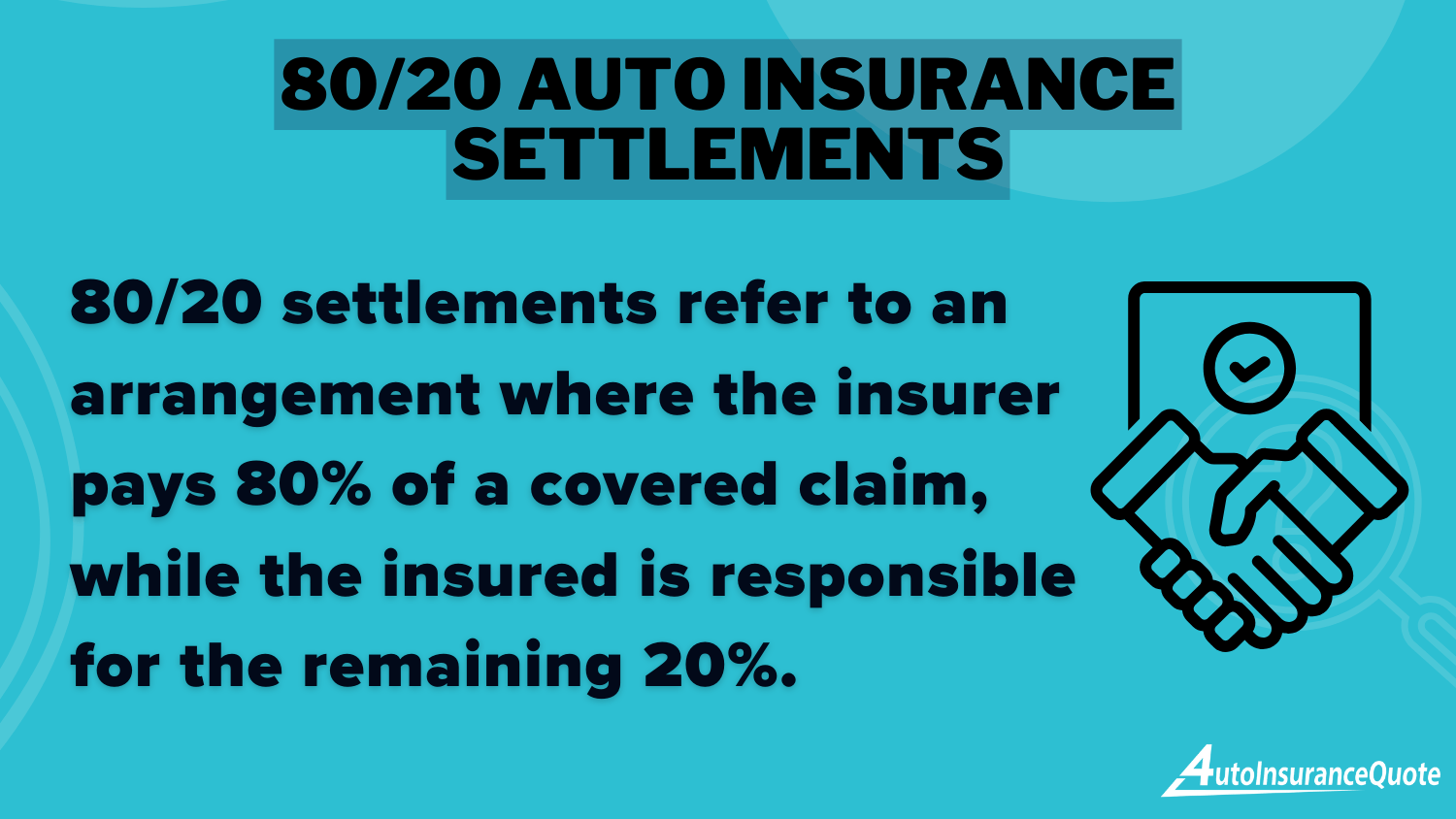
80/20 Auto Insurance Settlements in 2026 (Complete Guide)
-
Feb 2025
Can my auto insurance company use aftermarket parts to repair my vehicle?
-
Nov 2024

How To Check the Status of an Auto Insurance Claim in 2026
-
Nov 2024

Can I register a car in a state where I don’t live?
-
Feb 2025
Does auto insurance cover whiplash symptoms?
-
Jul 2024
What if you lie about where you live to your auto insurance company?


Get a FREE Quote in Minutes
Insurance rates change constantly — we help you stay ahead by making it easy to compare top options and save.