

Subrogation in Auto Insurance Explained for 2026 (+ Why It Matters)
Subrogation in auto insurance ensures timely payment for repairs or replacement of vehicles after an accident. The subrogation process allows insurers to recover costs from the at-fault driver's insurance. The subrogation agreement ensures that there will be no rate increase, which can be as low as $85/mo.
Read more Secured with SHA-256 Encryption






Find the Lowest Car Insurance Rates Today
Quote’s drivers have found rates as low as $42/month in the last few days!




Table of Contents
Table of Contents

Published Insurance Expert
Melanie Musson is the fourth generation in her family to work in the insurance industry. She grew up with insurance talk as part of her everyday conversation and has studied to gain an in-depth knowledge of state-specific insurance laws and dynamics as well as a broad understanding of how insurance fits into every person’s life, from budgets to coverage levels. Through her years working in th...
Melanie Musson

Licensed Insurance Agent
Brandon Frady has been a licensed insurance agent and insurance office manager since 2018. He has experience in ventures from retail to finance, working positions from cashier to management, but it wasn’t until Brandon started working in the insurance industry that he truly felt at home in his career. In his day-to-day interactions, he aims to live out his business philosophy in how he treats hi...
Brandon Frady
Updated January 2025
Subrogation in auto insurance is when your insurance company steps in to handle your claim after an accident and gets the money back from the driver who caused the accident or their insurance.
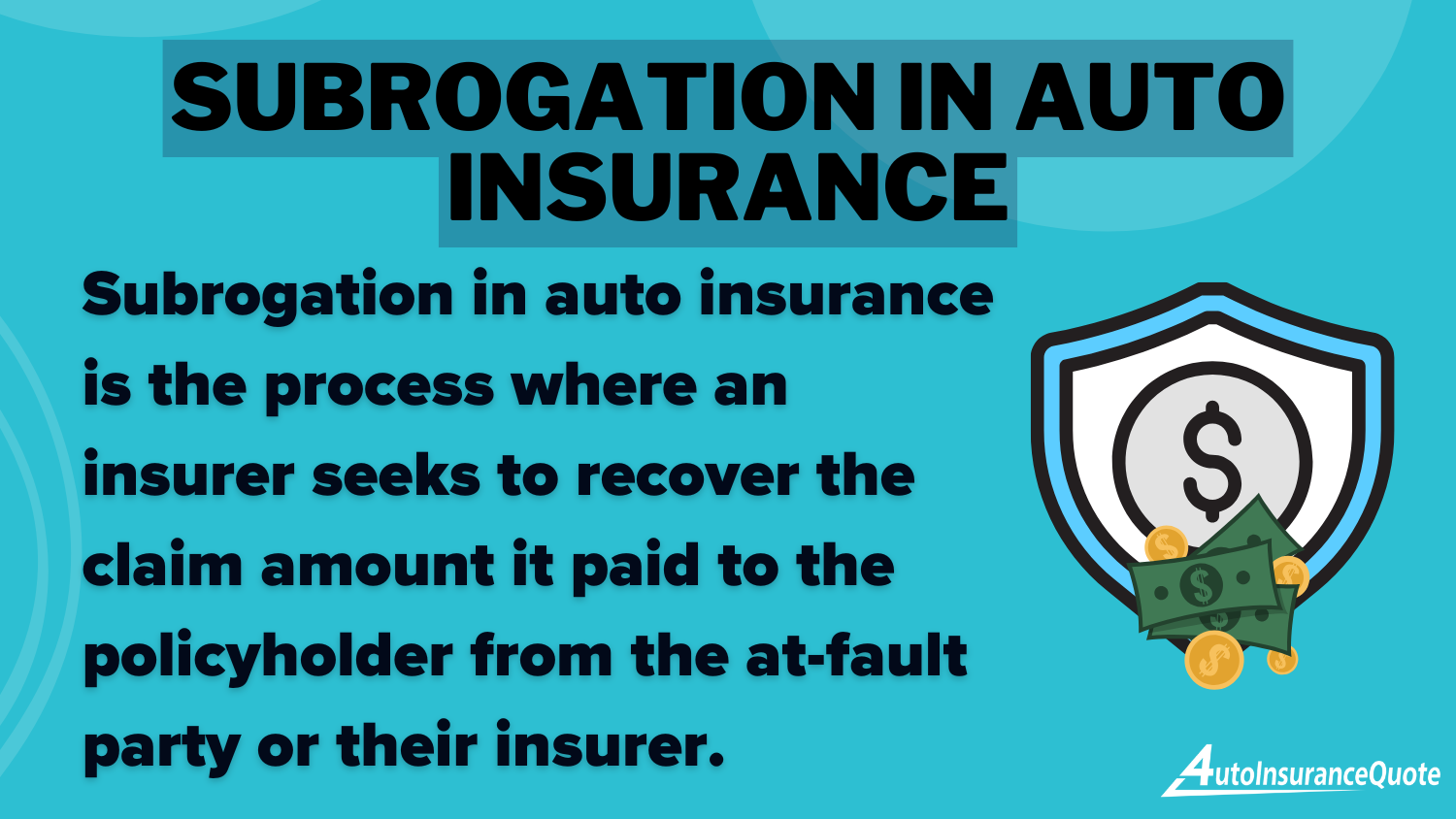
This ensures you don’t have to pay for someone else’s mistake. It also helps keep your insurance rates from going up. Companies like Allstate and State Farm often make the subrogation process smooth for you by handling the paperwork.
It’s a good idea to know how it works because it can speed up the process and help get things covered without extra costs on your end. To find out if you can get cheaper auto insurance rates, enter your ZIP code into our free quote tool to instantly compare rates from various companies near you.
Read more: How to File an Auto Insurance Claim
- Subrogation lets insurers recover costs from the at-fault driver’s insurance
- It helps prevent rate increases for drivers when the accident wasn’t their fault
- Subrogation speeds up claims without extra costs
Subrogation in Auto Insurance Explained
Subrogation in insurance is when your insurance company pays for your claim upfront and then gets the money back from the at-fault driver’s insurance. The meaning of subrogation is easy to understand—it ensures you get financial support quickly while your insurer works to recover the costs.
Subrogation allows your insurance company to pay for damages and then recover the costs from the at-fault driver's insurer, helping you avoid rate increases.
Maria Hanson Insurance and Finance Writer
An example of subrogation in auto insurance is if Allstate pays for your car repairs after an accident and then collects the amount from the other driver’s insurance. This subrogation process ensures fairness by holding the responsible party accountable.
When a subrogation insurance claim happens, your insurance company sends a subrogation notice to the at-fault driver’s insurer. Understanding subrogation helps you see how claims work and why it often prevents your insurance rates from going up if the accident wasn’t your fault.
Read more: How do I recover my auto insurance deductible from the at-fault driver?
Free Insurance Comparison
Compare Quotes From Top Companies and Save
Secured with SHA-256 Encryption
Subrogation Claims in the Auto Insurance Claims Process
Subrogation is a legal term that originated from Latin. “Sub” means “instead of,” and “rogare” means “to ask.” Subrogation happens when a third party collects damages or a debt on behalf of someone else. It asks one party to act instead of another.
For example, if you have an accident and someone else caused it, your auto insurance company can pay your claim and then recover the costs from the other driver’s insurance coverage.
Auto Insurance Subrogation Process: Key Steps and Benefits Explained| Description | Rank | Benefits |
|---|---|---|
| Incident Occurs | #1 | Foundation for claims process |
| Claim Filed with Insurance | #2 | Compensation while pursuing subrogation |
| Investigation and Liability Determination | #3 | Identifies responsible parties |
| Insurance Company Pays the Claim | #4 | Insured reimbursed, insurer pursues recovery |
| Subrogation Initiated | #5 | Pursuit of responsible third party |
| Recovery of Funds | #6 | Recovery reduces future premiums |
| Policyholder Repayment or Deductible Adjustment | #7 | Refund or deductible adjustment |
| Resolution and Final Adjustment | #8 | Closes claim and ensures fairness |
Your company acts on your behalf to pay you promptly and then get compensation from whoever caused the accident. With subrogation, you can often retain a good driver auto insurance discount if an accident was someone else’s fault.
Additionally, when you’re in an accident, and someone else is at fault, your insurance company may subrogate. This means they pay your claim upfront and then pursue the other driver’s insurance for the costs.
Subrogation in Auto Insurance Monthly Rates by Provider| Insurance Provider | Monthly Rates |
|---|---|
 | $130 |
 | $120 |
 | $115 |
 | $95 |
 | $125 |
 | $105 |
 | $110 |
 | $120 |
 | $110 |
 | $85 |
This process is called an insurance subrogation claim. With subrogation and recovery, an insurer has the right to recover the money they paid you from the at-fault party’s insurance. This ensures you’re not stuck with the costs of someone else’s mistake.
How Subrogation Claims Work
Subrogation in auto insurance happens when your insurance company pays for the damage caused by an accident, but since someone else was at fault, they then work to get that money back. This process uses the right of subrogation, where your insurance company gets the right to recover the money from the at-fault driver’s insurance.
This is called legal subrogation because the company steps in on your behalf. Some auto insurance policies include a contract subrogation that lets the insurer recover money directly. The policy might even have a subrogation provision, which helps your insurer get reimbursed after they pay for your damages.
When the insurance company recovers the costs, they’re subrogated—acting in your place to ensure the responsible driver’s insurer pays for the damage they caused. It’s a legal way to protect you and make sure the at-fault driver’s insurance covers the cost.
Read more: How long does it typically take for State Farm to process an auto insurance claim?
Waiver of Subrogation
In some circumstances, you might want to keep your auto insurance company from suing someone on your behalf. A waiver of subrogation is an agreement that keeps your insurance company from suing the party who’s at fault for reimbursement.
How waiver of #subrogation clauses affect #Florida #insurance companies: https://t.co/4Gj8t5Otck | #claims #liability #InsuranceLaw pic.twitter.com/bTAKsQ2UoT
— Conroy Simberg (@Conroysimberg) January 2, 2025
Some insurance companies don’t let people waive subrogation. Before you sign a waiver of subrogation or any other agreement, check your insurance policy or speak to the customer service department to ensure your insurer permits this.
You may need to sign a waiver of subrogation if an at-fault party asks you to sign a waiver of subrogation in exchange for a direct settlement.
You might also know the at-fault party and want to avoid risking your relationship with them by letting your insurer sue them. A waiver of subrogation could also be part of a contract that people sign before having any accidents.
Moreover, learn how an auto insurance deductible works and how it impacts your coverage decisions while exploring options that can help you save money and choose the best policy for your needs.
Free Insurance Comparison
Compare Quotes From Top Companies and Save
Secured with SHA-256 Encryption
Understanding Subrogation in Auto Insurance Claims and Their Benefits
Subrogation can help you get paid for repairs or a replacement vehicle more quickly after an accident. Insurance companies are often more likely to make payments when they can sue a third party or negotiate with them to recover funds.
Since the at-fault driver or their insurance company ultimately pays the financial penalty for the accident, your auto insurer usually won’t raise your rates for a subrogation claim.
In addition, subrogation in auto insurance helps speed up your claim process. When an accident happens, and the other driver is at fault, your insurer uses its subrogation rights to recover money from their insurance company.
Many insurance policies have a subrogation agreement and a subrogation clause to explain how this works. The main benefit is that your insurance usually won’t raise your rates because the at-fault driver’s insurance pays for the damages. Subrogation in auto insurance helps ensure you’re taken care of without costing you more.
You can compare subrogation policies and other insurance options by getting affordable instant auto insurance quotes. You can also learn how to check the status of an auto insurance claim. Start saving on your auto insurance by entering your ZIP code and comparing quotes.
Frequently Asked Questions
What does subrogation in auto insurance mean?
It refers to the process where your insurance company pays for your claim (e.g., car repairs or medical bills) after an accident and then seeks reimbursement from the at-fault party’s insurance. Essentially, your insurer steps in to recover the costs from the other driver’s insurance, ensuring you aren’t financially responsible for the other driver’s mistake. This often prevents your insurance rates from rising if the accident wasn’t your fault.
What is the purpose of subrogation in auto insurance?
The purpose of subrogation is to allow your insurance company to pay for your claim upfront and then recover the costs from the at-fault driver’s insurer. This helps ensure you’re not stuck paying for someone else’s mistake and keeps your insurance rates from increasing. Get the best auto insurance rates possible by entering your ZIP code into our free comparison tool today.
Will my insurance premiums go up after a subrogation claim?
In most cases, your insurance rates won’t go up after a subrogation claim because the at-fault driver’s insurance will ultimately cover the cost of your damages. Subrogation ensures that the responsible party’s insurer pays for the claim.
Read more: What is a claims adjuster’s role in the auto insurance claims process?
Can I claim subrogation if the other driver has no insurance?
Yes, even if the other driver is uninsured, your insurance company may still pay your claim and try to recover the costs through other means, like uninsured motorist coverage or through the driver’s assets.
Do all insurance policies include subrogation rights?
Yes, most auto insurance policies automatically include subrogation provisions. This allows the insurance company to recover funds they paid out on your behalf from the at-fault party’s insurer.
What happens if the other driver’s insurance refuses to pay?
If the other driver’s insurance refuses to pay, your insurance company will continue pursuing the claim through legal action or other recovery methods. In some cases, it might also affect the time it takes to resolve the claim. Explore our guide on auto insurance inquiry vs. auto insurance Ccaim to learn the key differences and how each impacts your policy.
Can I waive the subrogation in my insurance policy?
Yes, some policies may allow you to waive subrogation. However, this typically requires a specific agreement and could be part of a contract (like when leasing a vehicle). Make sure to discuss this with your insurer if you’re considering this option.
How long does the subrogation process take?
If the other driver has insurance, admits they were at fault and doesn’t contest your insurance company’s claim, the process could only take a few days. If an uninsured driver was at fault or both drivers were partially responsible for the accident, the subrogation process could take several weeks.
Can I wait to file an auto insurance claim?
In most states, people can wait up to two or three years to start an auto insurance claim. If you need medical treatment, you may not know the full cost until the treatment is over. If a driver refuses to give their contact and insurance information, it could take time to find their identity before filing a claim.
Read more: How long does it take for an auto insurance company to pay out a claim?
What does pending subrogation mean?
Pending subrogation means that your insurance company is waiting for payment from another driver’s insurance company.
Related Articles
-
Jan 2025

How much do Liberty Mutual auto insurance rates increase after an accident? (2026)
-
May 2025
Affordable Auto Insurance With a Bankruptcy Record (2026)
-
Mar 2025
Are you required to add your children to your auto insurance policy?
-
Nov 2024

What happens if fault can’t be determined after a car accident?
-
Mar 2025
What is the process for canceling my auto insurance policy with Infinity Insurance?
-
Feb 2025
Can I use out-of-state auto insurance?






Get a FREE Quote in Minutes
Insurance rates change constantly — we help you stay ahead by making it easy to compare top options and save.
Secured with SHA-256 Encryption